Equipping a heavy vehicles technical inspection centre

A heavy vehicles technical inspection centre cannot be viewed simply as a larger version of a light vehicle centre: loads, dimensions and manoeuvres alter the entire configuration. Here is how to frame the project.

Transport flotte camions

Which vehicles fall under the remit of a heavy vehicles centre?

A heavy vehicles centre is not defined simply by a tonnage limit: it is defined by the diversity of vehicles it must accommodate, and by the dimensions that this diversity imposes on the facility.

  • Rigid lorries and tractor units, whose wheelbases and track widths vary considerably.
  • Semi-trailers and trailers, which raise the issue of coupling and overall length when coupled.
  • Coaches and buses, with their height and overhang restrictions.
  • Special-purpose vehicles: tippers, tankers, construction vehicles, whose dimensions are out of the ordinary.

This variety is what most clearly distinguishes a heavy goods vehicle centre from a light vehicle centre: the same route must remain usable for vehicles ranging from the shortest to the longest.

The test stations on a heavy goods vehicle line

The equipment families are the same as on a line for light vehicles, but each station is sized differently — and this difference in sizing alters the layout.

Braking and running gear

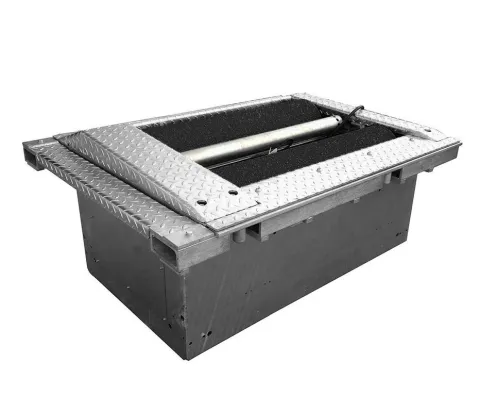
The heavy vehicle brake tester forms the heart of the line: high load ranges, wide lanes, significant approach length. Depending on the configuration, it is accompanied by side slip testers and play detectors sized for the same loads.

See the ranges of brake testers, side slip testers and play detectors.

Emissions and emission control

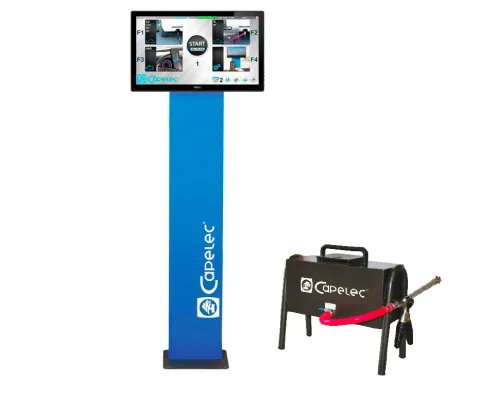
Diesel engines dominate the heavy vehicle fleet: smoke meters and, depending on the market, particle counters play a central role. Access to the exhaust, which is often high and on the side, must be taken into account when setting up the test station.

See the ranges of smoke meters and particle counters.

Lighting

The height of the headlamps on a heavy vehicle requires a wider measurement range and greater instrument stability than those of a light vehicle. The measurement area must be sized to accommodate the length of the vehicles being tested.

See the range of headlamp beamsetters and our guide how to choose a headlamp beamsetter.

Diagnostics and supplementary measurements

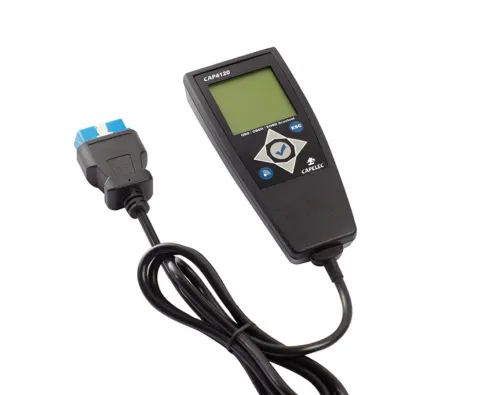
OBD readers, sound level meters, decelerometers and speed testers complete the range in accordance with the applicable protocols and approved categories.

See the ranges OBD readers and decelerometers.

Capelec equipment for a test line for heavy vehicles

Designed to cope with the loads, track widths and variety of heavy vehicles.

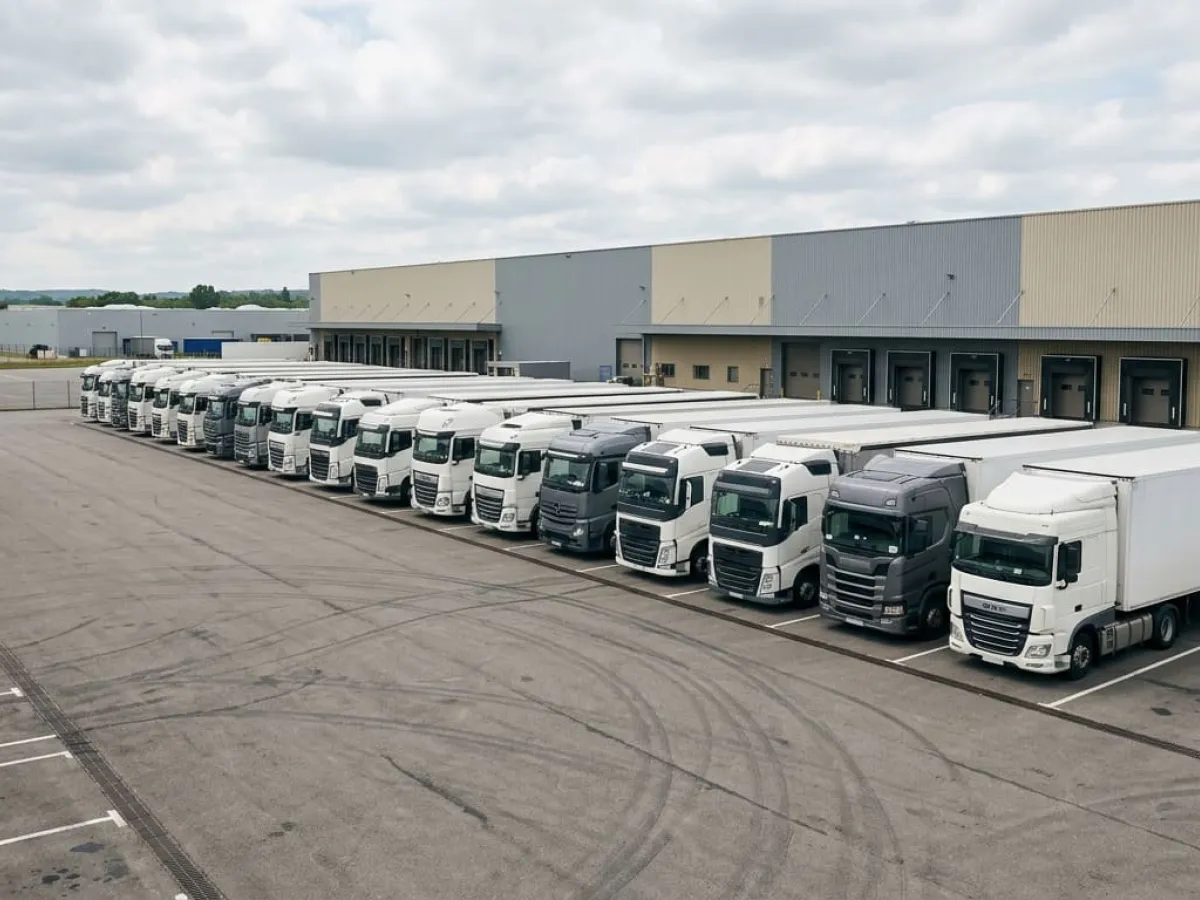
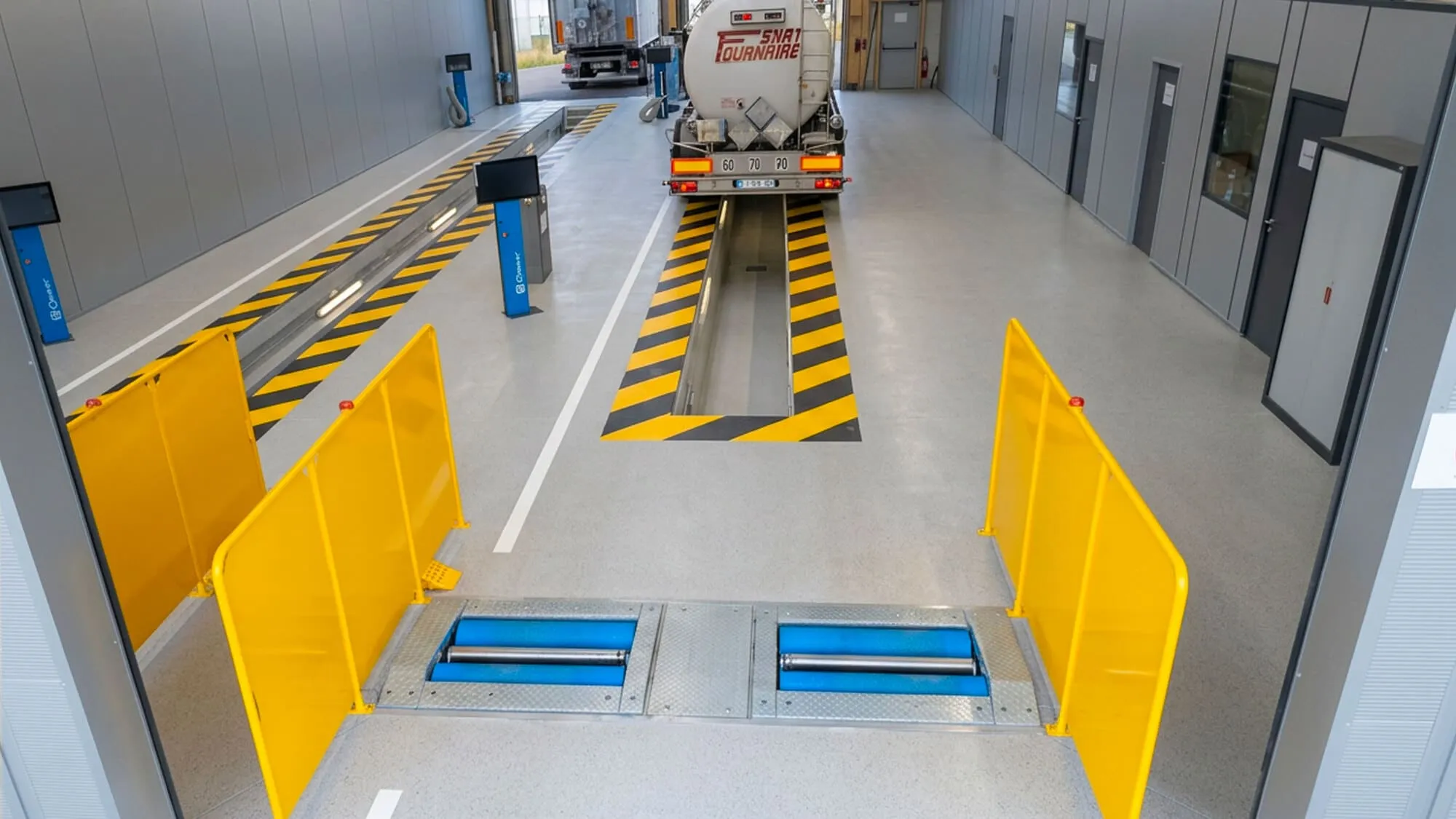
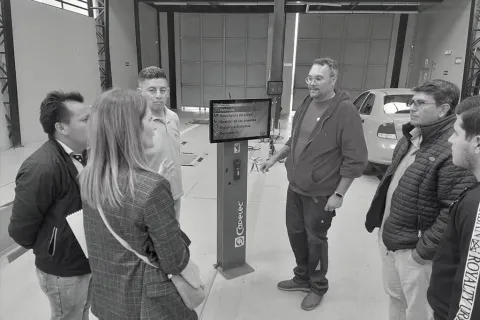
Heavy vehicles undergoing a vehicle inspection
On a test line for heavy vehicles, the length of the vehicle determines the entire layout.

Layout and traffic flow: the real challenge for a heavy vehicles testing centre

At a heavy vehicles testing centre, it is not the choice of equipment that is the most challenging aspect, but rather how it is integrated into the building. Four key factors come into play.

  • Line length: approach, station and clearance must be calculated for the longest vehicle, including the trailer.
  • Turning radii: entry, exit and external manoeuvres determine the layout just as much as the interior of the building.
  • The floor’s load-bearing capacity: this determines the feasibility of concrete slabs and how built-in equipment is installed.
  • Clearance height: this must remain sufficient along the entire route, including beneath overhead cables and raised gates.

A through-route is almost always preferable in a heavy goods vehicle centre: reversing manoeuvres by articulated lorries take up a considerable amount of time and space.

Plan the layout of my test lane

The stages of a heavy goods vehicle centre project

01

Scope of activity

Types of vehicles inspected, expected volume and projected trends in the vehicle fleet undergoing inspection.

02

Workstation configuration

Equipment designed to handle the loads and dimensions specific to your business.

03

Location and traffic

Line length, external manoeuvres, ground clearance and headroom.

04

Installation and commissioning

Site preparation, installation, configuration and training for operators.

Why choose Capelec

Design office and factory together in Montpellier: you deal directly with the designer and manufacturer of your equipment, from design to maintenance. Equipment in use on every continent, with subsidiaries in Germany and India.

30+ years

designing and manufacturing measuring equipment

ISO 9001

certified production, every unit checked at the end of the line

10%

of revenue invested in research and development

48h

to receive a proposal tailored to your project

A heavy vehicles technical inspection centre and a HGV car repair shop do not have the same scope of activity or the same set-up. If your project concerns a workshop — maintenance, repairs, fleet management — please refer instead to our page installing a brake tester in a heavy vehicles workshop.

Frequently Asked Questions

Which brake tester is suitable for a technical inspection centre for heavy vehicles?

The CAP9110 test bench accommodates up to 20 t per axle, measures up to 40,000 daN and accommodates track widths from 80 to 280 cm. Compact (135 × 80 × 57 cm), it fits into any civil engineering environment.

Which play detectors are suitable for heavy vehicles?

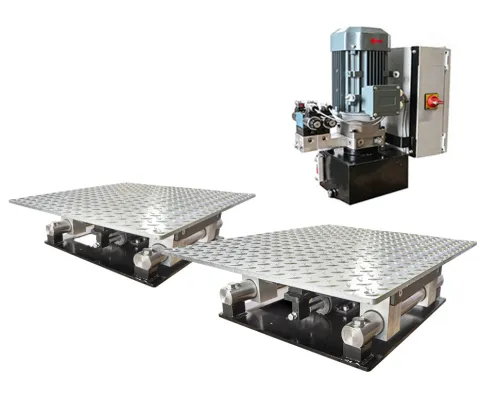
The CAP9200 PEH and CAP9210 PEH hydraulic play detectors are installed on either side of a pit and test the running gear of heavy vehicles, buses and commercial vehicles weighing over 4 t. The CAP9210 PEH units are CDC 7A-compatible.

Which smoke meter is suitable for a heavy goods vehicle testing centre?

The CAP3600 O connected smoke meter is used in light and heavy vehicle technical inspection centres: results comply with standard NFR 10025-2016 and are transmitted via encrypted communication.

Can light and heavy vehicle services be combined within the same centre?

The equipment families are the same, but each heavy goods vehicle (HGV) station is configured differently. The configuration and layout are determined based on the vehicles actually received.

Continue

Planning a heavy vehicles centre?

Please provide us with details of the vehicles you intend to test and a site plan: we will assess the appropriate configuration and layout.

Back to top