What budget should be set aside for equipment at a technical inspection centre?

How much should you budget for equipping a technical inspection centre? The answer depends on a number of specific factors. Here are the items that make up an equipment budget, the factors that cause them to vary, and the information you need to gather to obtain a reliable estimate.
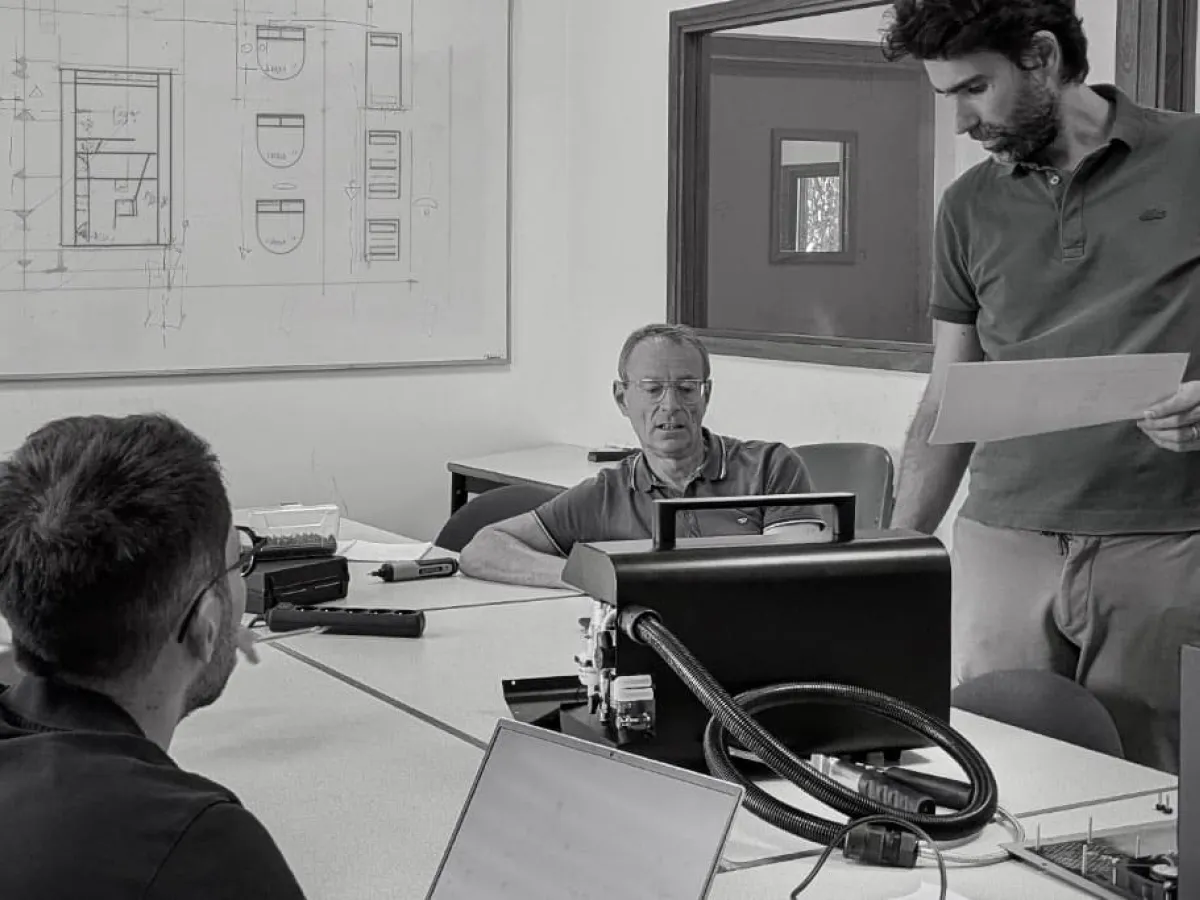
Ingénieurs du bureau d'études Capelec en réunion autour de plans

What is and is not covered by an equipment budget

The budget referred to here relates to measuring equipment and its commissioning. It does not cover either the overall cost of setting up a business (premises, licences, staff, insurance, working capital) or building works, which are the responsibility of your main contractor.

Distinguishing between these two areas helps to avoid a common mistake during the set-up phase: comparing an equipment quote with the overall start-up budget, and wrongly concluding that the project is under-resourced or over budget.

The four components of an equipment budget

Regardless of the project’s size, a cost estimate is broken down in the same way. However, the proportions between these components vary significantly from one centre to another.

01

Measuring equipment

The main role. This depends on the categories of vehicles being inspected and the number of test lanes to be equipped.

02

Installation and commissioning

Installation, connections, configuration, checks and familiarisation. The scope varies depending on the condition of the site.

03

Options and adaptations

Accessories, installation adaptations, and interfaces with your information system or organisation.

04

Recurring costs

Maintenance, periodic inspections, software updates and consumables, depending on the equipment.

Factors affecting the cost

Two centres of comparable size may have very different equipment budgets. The most significant factors influencing this variation are as follows.

Factor Why it affects the budget
Categories of vehicles inspected A heavy vehicles lane requires equipment designed for loads and lanes that are much larger than those of a light vehicle lane.
Number of lines Moving from one line to several increases the amount of equipment required, but not necessarily the number of support staff or the level of supervision.
Condition of the premises A new building, premises to be taken over or an existing centre requiring modification do not all require the same site preparation.
Level of automation The degree of integration between the devices and the transmission of measurements affects the time taken for the installation and the configuration chosen.
Scope of installation Depending on the division of labour between your team and ours, the installation costs may vary from one budget to another.

This is why a reliable quotation is based on your actual situation, rather than an average price: for the same configuration, the difference between two projects stems primarily from the premises and the chosen organisational approach.

A quote based on your specific project, not a generic price range. A quoted price without specific assumptions (vehicle categories, number of test lanes, site condition, scope of installation) rarely corresponds to a real-world project. Your quote is based on your specific configuration, including its assumptions and scope: describe your project and receive a tailored proposal within 48 hours.

Why choose Capelec

Design office and factory together in Montpellier: you deal directly with the designer and manufacturer of your equipment, from design to maintenance. Equipment in use on every continent, with subsidiaries in Germany and India.

30+ years

designing and manufacturing measuring equipment

ISO 9001

certified production, every unit checked at the end of the line

10%

of revenue invested in research and development

48h

to receive a proposal tailored to your project

Information required for a quotation

The more detailed your enquiry, the more accurate the quotation will be — and the less likely it is to change between the initial assessment and the order. Here is what we need from the very first discussion.

  • The vehicle categories you intend to inspect, and the expected volume of vehicles passing through.
  • The number of lanes to be fitted, both currently and in the future.
  • The dimensioned floor plan of the premises, showing the headroom and the condition of the floor slab or pit.
  • The available power supplies and the location of the connection points.
  • The targeted timetable: opening date or date of recommissioning.
  • The existing setup, where applicable: equipment in place, age, makes.

Get a tailored quote

Should all lines be numbered from the outset?

Not necessarily, but it is useful to outline the long-term ambition. A layout designed for two test lanes, even if only one is currently equipped, is cheaper than having to carry out civil engineering work two years later.

How should recurring costs be handled?

Maintenance, periodic inspections and updates are included in the operating budget, not in the initial investment. The available options are set out in the proposal and on the page contract subscription and repairs.

And what about financing the investment?

Possible financing solutions for an equipment project can be discussed with our team once the configuration has been finalised.

Finance and protect your investment

Funding
Possible financing solutions for your equipment project.

Continue preparing your project

Draw up your financing plan on a sound footing

Please provide us with the details of your project: you will receive a quotation based on your actual configuration, including the assumptions and scope.

Back to top