Above-ground or recessed test bench: what actually changes
Two installation methods coexist. The choice depends not on measurement performance but on the installation work, day-to-day operation and the building’s constraints.
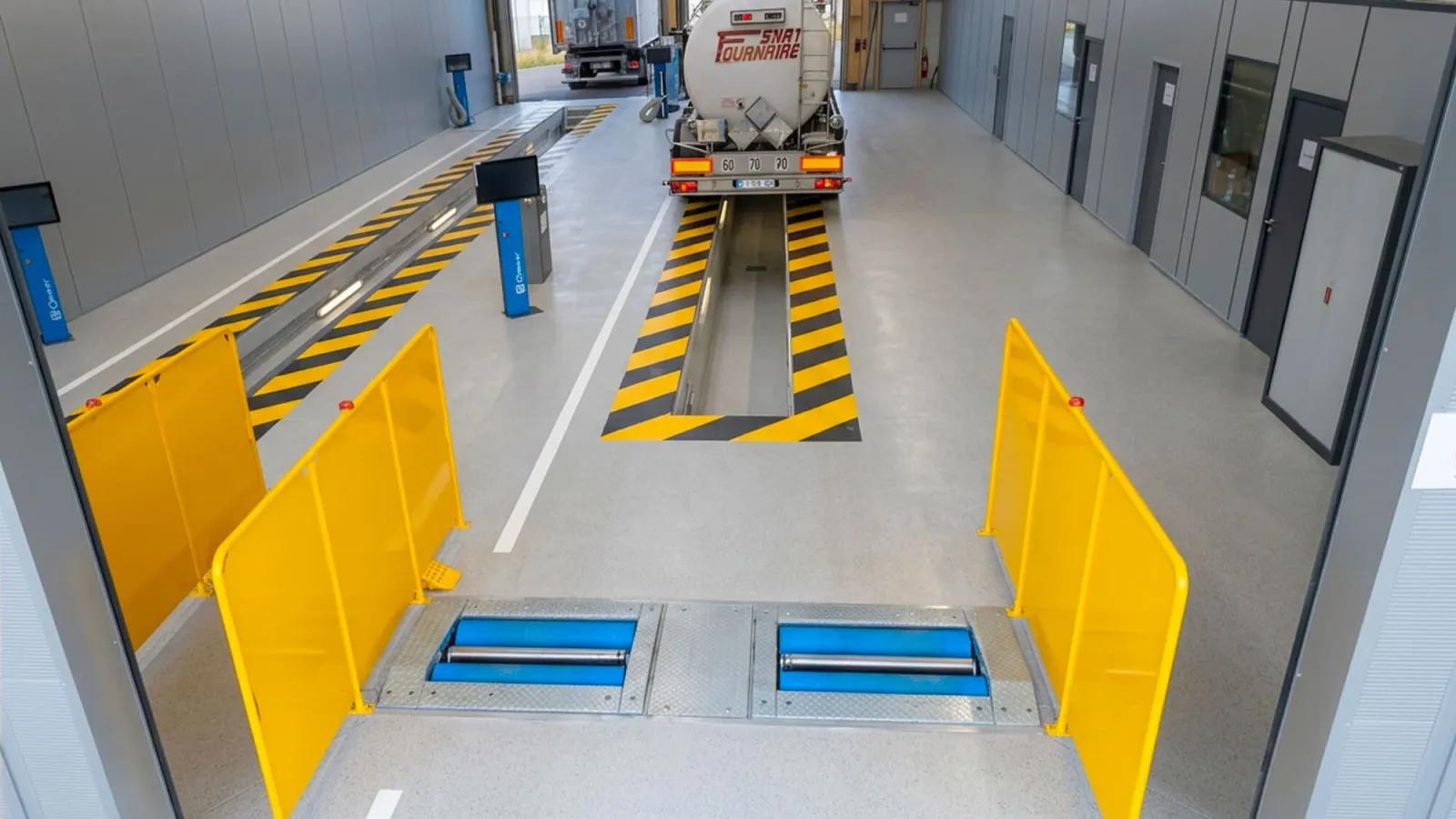
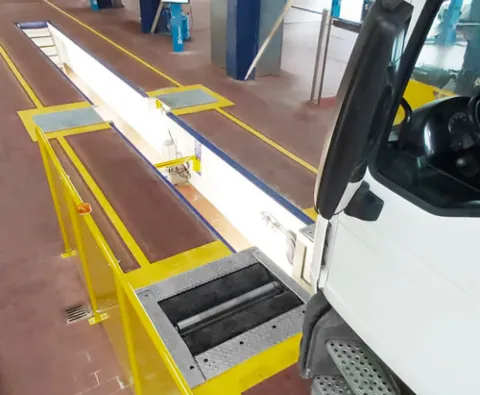
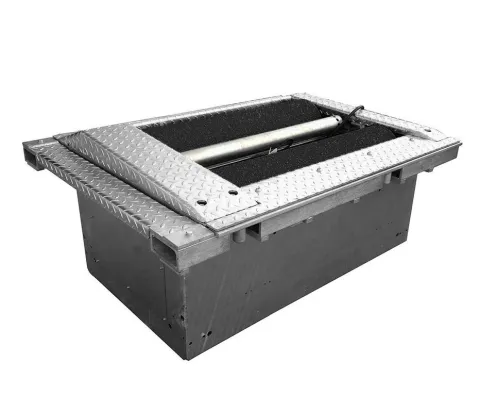
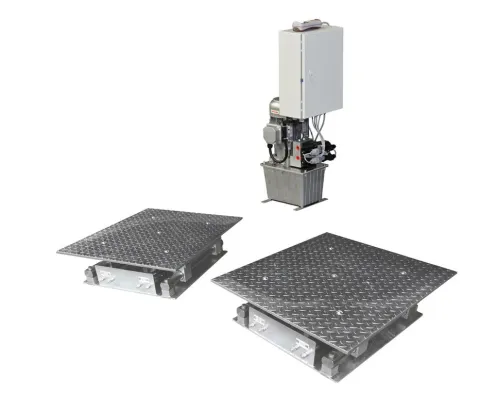
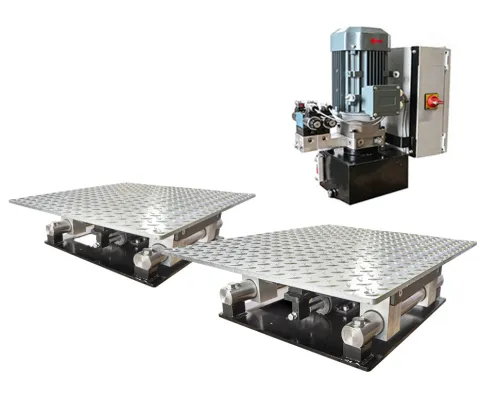
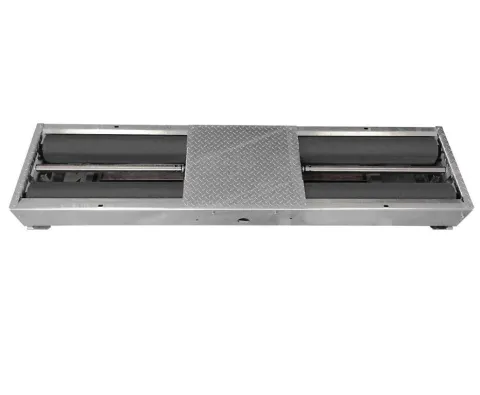
A recessed test bench is integrated into a structure at ground level: the vehicle drives directly onto the rollers. An above-ground test bench is installed on the concrete slab, and the vehicle accesses it via ramps. This should not be confused with a ‘pitless’ test bench, which refers to the absence of an inspection pit, nor with a mobile test bench, which is designed to be moved.
|
Recessed |
Above-ground |
| Works |
Foundation to be constructed: earthworks, formwork, slab repair. More extensive and time-consuming works. |
Installation on an existing slab if its load-bearing capacity permits. Minimal works. |
| Vehicle access |
Level access at ground level, without ramps. |
Access ramps: additional length to be allowed for upstream and downstream. |
| Ground footprint |
Footprint limited to that of the bench; unobstructed traffic flow around it. |
Footprint of the bench and its ramps, which remain in place permanently. |
| Use of the span |
The span remains usable for other operations when the bench is not in use. |
The bench area is less versatile. |
| Reversibility |
Permanent installation, difficult to move. |
Installation easier to dismantle or redeploy. |
| Cost factors |
More extensive civil engineering works, comparable equipment. |
Reduced civil engineering works; ramps and ground preparation required. |
In summary: a new workshop or one undergoing major refurbishment, with a bay dedicated to inspection, often opts for the recessed system; a workshop already in operation, constrained by its floor slab or a lease, finds the surface-mounted system a quicker solution to implement. The exact technical requirements depend on the model chosen and will be confirmed to you during the design phase.