Installing a brake tester in a heavy-duty truck repair shop

Equipping a heavy-duty truck repair shop with a brake tester involves choosing among several configurations, depending on the types of vehicles serviced and the available space. Here are the criteria to consider before beginning the installation.

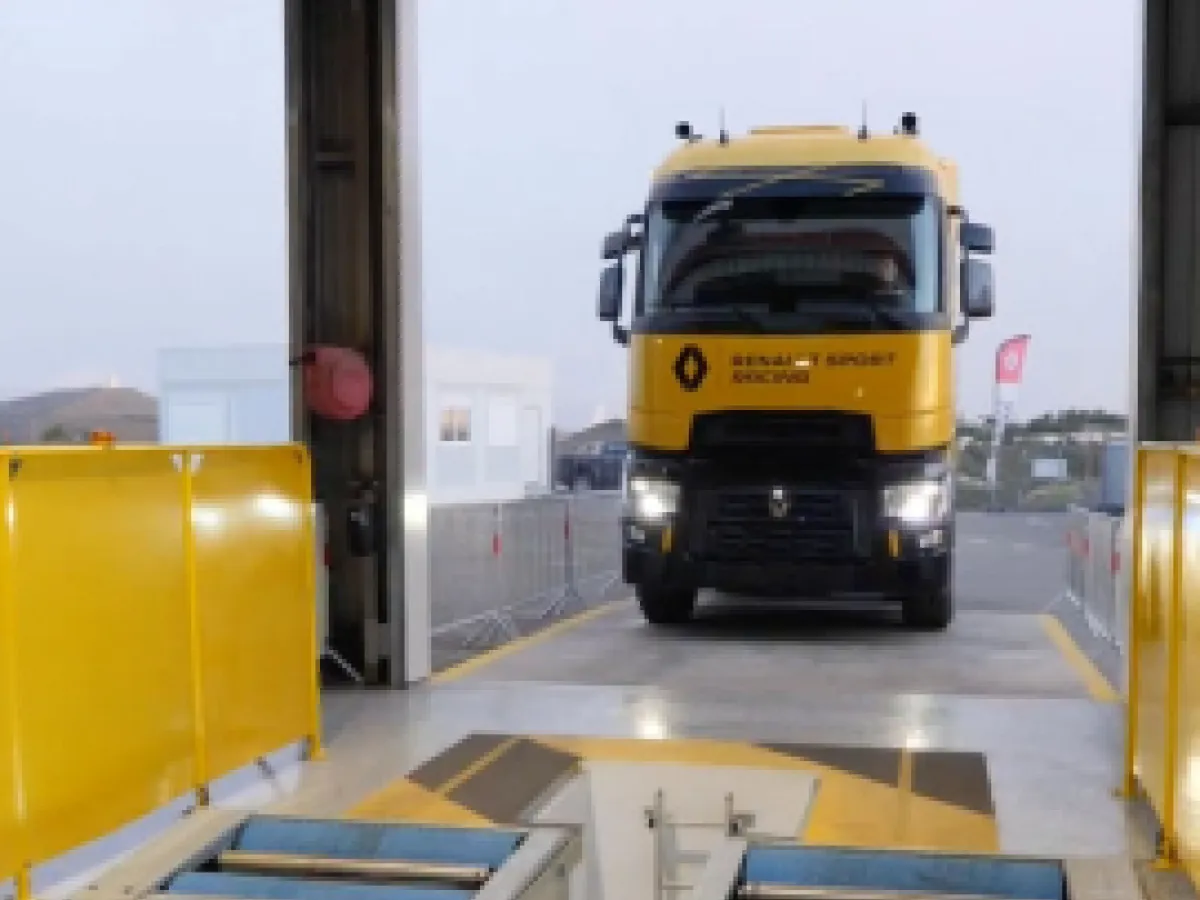
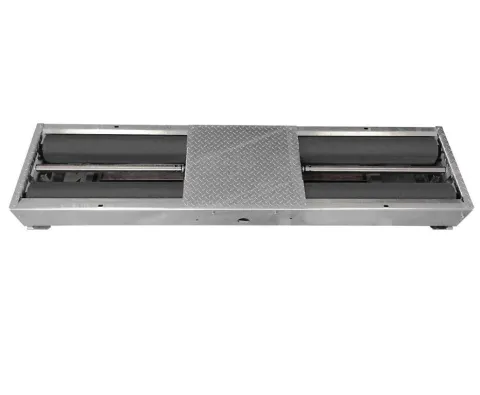
banc de frein PL avec fosse CAPELEC

Which vehicles, for what purpose?

A heavy-duty workshop brake tester should not be chosen based solely on its load capacity. The vehicles being serviced and how the workshop handles them determine the appropriate configuration.

  • Vehicle types: trucks, tractors, semi-trailers, trailers, buses and coaches, heavy-duty commercial vehicles. Track widths, wheelbases, and axle loads vary significantly.
  • Intended use: pre-inspection checks, diagnostic testing during maintenance, post-repair verification, fleet monitoring. Traceability requirements differ.
  • Frequency: a few vehicles per week or several per day do not warrant the same level of integration or automation.
  • Workshop layout: a dedicated workstation, or a test bench integrated into a bay already used for other operations.

This page is intended for repair shops considering the purchase of a test bench. If you are looking to have a vehicle inspected, please contact a vehicle inspection center.

Check available space

The test bench does not just occupy its own footprint: it requires an approach area, an exit area, and a workspace around the vehicle. For a heavy-duty truck, these dimensions quickly become critical.

  • The available span length, including approach and clearance, for the longest vehicle accepted.
  • The clear height, including clearance under overhead lines and any overhead cranes.
  • The floor load capacity and the type of slab, which determine the installation method.
  • The entry alignment: a long vehicle must be able to drive straight onto the rollers.
  • The position of the control station and the operator’s visibility of the vehicle.

Above-ground or recessed test stand: what actually changes

Two installation methods coexist. The choice depends not on measurement performance but on construction work, daily operations, and building constraints.

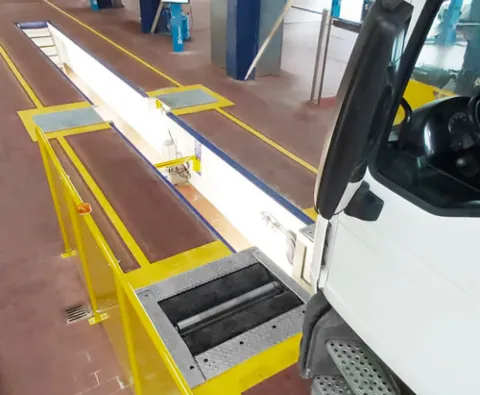
A recessed test stand is integrated into a ground-level structure: the vehicle drives directly onto the rollers. An above-ground test stand is mounted on the slab, and the vehicle accesses it via ramps. This should not be confused with a “pitless” test stand, which refers to the absence of an inspection pit, nor with a mobile test stand, which is designed to be moved.

Recessed Above-ground
Work Structure to be built: earthwork, formwork, slab repair. More extensive and time-consuming work. Installation on an existing slab if its load-bearing capacity allows it. Minimal work required.
Vehicle access Ground-level access, no ramp required. Access ramps: additional length required upstream and downstream.
Footprint Footprint limited to that of the bench; unobstructed traffic around it. Footprint of the bench and its ramps, which remain in place permanently.
Use of the span The span remains usable for other operations when the bench is not in use. The bench area is less versatile.
Reversibility Permanent installation; difficult to move. Installation is easier to dismantle or redeploy.
Cost factors More extensive civil engineering work; comparable equipment. Reduced civil engineering work; ramps and ground preparation required.

In summary: A new workshop or one undergoing major renovation, with a bay dedicated to inspection, often opts for the recessed system; a workshop already in operation, constrained by its floor slab or a lease, finds the above-ground system a faster solution to implement. The exact technical requirements depend on the selected model and will be confirmed during the design phase.

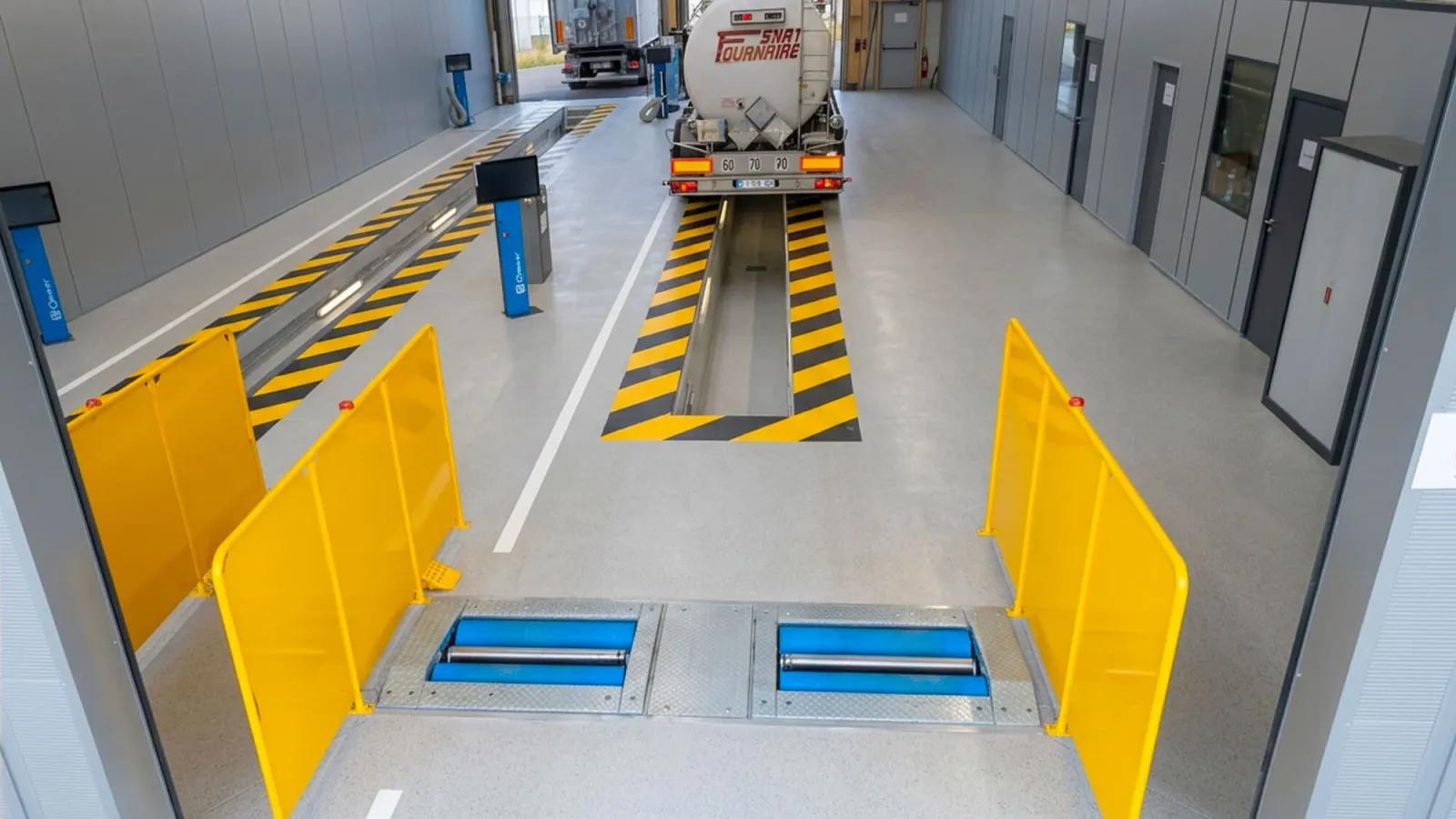
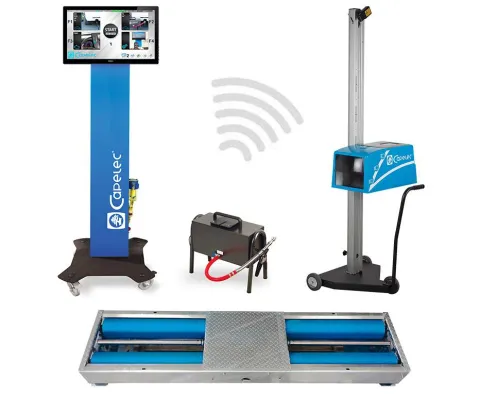
Capelec equipment for heavy-duty truck workshops

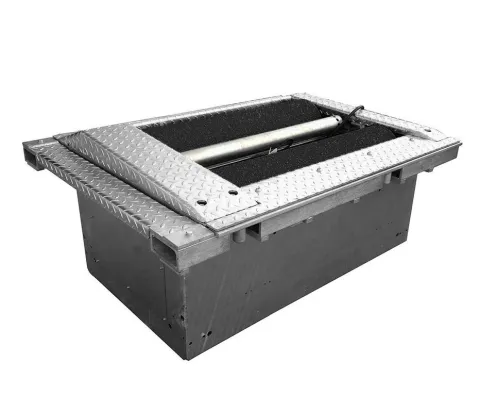
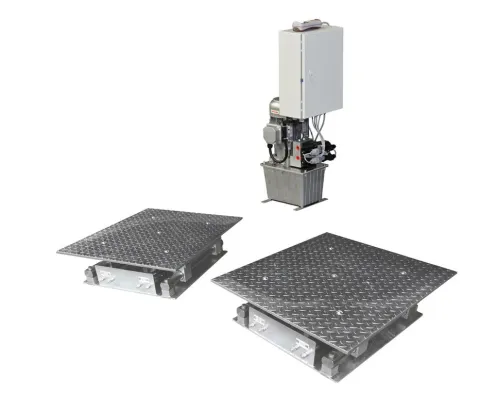
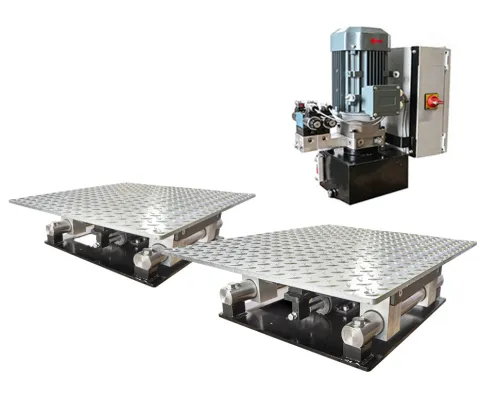
The brake tester and the play plates, which often share the same structural design.

The Installation Process

As with a complete line, site preparation precedes delivery. The schedule is worked backward from the commissioning date.

01

Definition of Requirements

Vehicles tested, intended uses, and frequency of use of the equipment.

02

Workshop Report

Span, headroom, floor slab, and access: the constraints that guide the configuration.

03

Work and Connections

Earthwork or ground preparation, power supply, compressed air, and utility networks.

04

Installation and Getting Started

Installation, configuration, testing, and operator training on their vehicles.

Why choose Capelec

Design office and factory together in Montpellier: you deal directly with the designer and manufacturer of your equipment, from design to maintenance. Equipment in use on every continent, with subsidiaries in Germany and India.

30+ years

designing and manufacturing measuring equipment

ISO 9001

certified production, every unit checked at the end of the line

10%

of revenue invested in research and development

48h

to receive a proposal tailored to your project

What You Need to Provide Us

  • The types of vehicles to be tested and their axle loads.
  • The workshop layout, including the planned bay and its usable length.
  • The type of floor slab and, if known, its load-bearing capacity.
  • Whether there is a pit or a foundation.
  • Available power and the location of connections.
  • Your scheduling and operational constraints during the work.

Evaluate my installation

Is a pit required?

No: the presence of an inspection pit is independent of the test stand’s installation method. A recessed test stand is installed in a concrete foundation, which is not an inspection pit. Both can coexist within the same bay if the layout permits.

Can a heavy-duty vehicle test stand inspect light-duty vehicles?

Load ranges and channels differ significantly between a test bench designed for heavy-duty vehicles and one designed for light-duty vehicles. Versatility depends on the model: it must be verified on a per-unit basis, never as a general rule.

What maintenance should be planned?

A brake tester undergoes periodic inspections and routine maintenance. The available options are presented on the page contract enrollment and repairs.

The equipment in question

Brake test stands
The Capelec product line, from heavy-duty test benches to multifunction test benches.

Planning to install a brake dynamometer in your shop?

Please provide us with the specifications of your workshop and the vehicles you service: we will evaluate the appropriate configuration and installation method.

Back to top