Gas analyzer, opacimeter, or combined unit: which configuration should you choose?

Setting up or upgrading an emissions testing station requires knowing what each device measures and how to group them together. Here’s how to match the engine types you receive with the appropriate configuration.

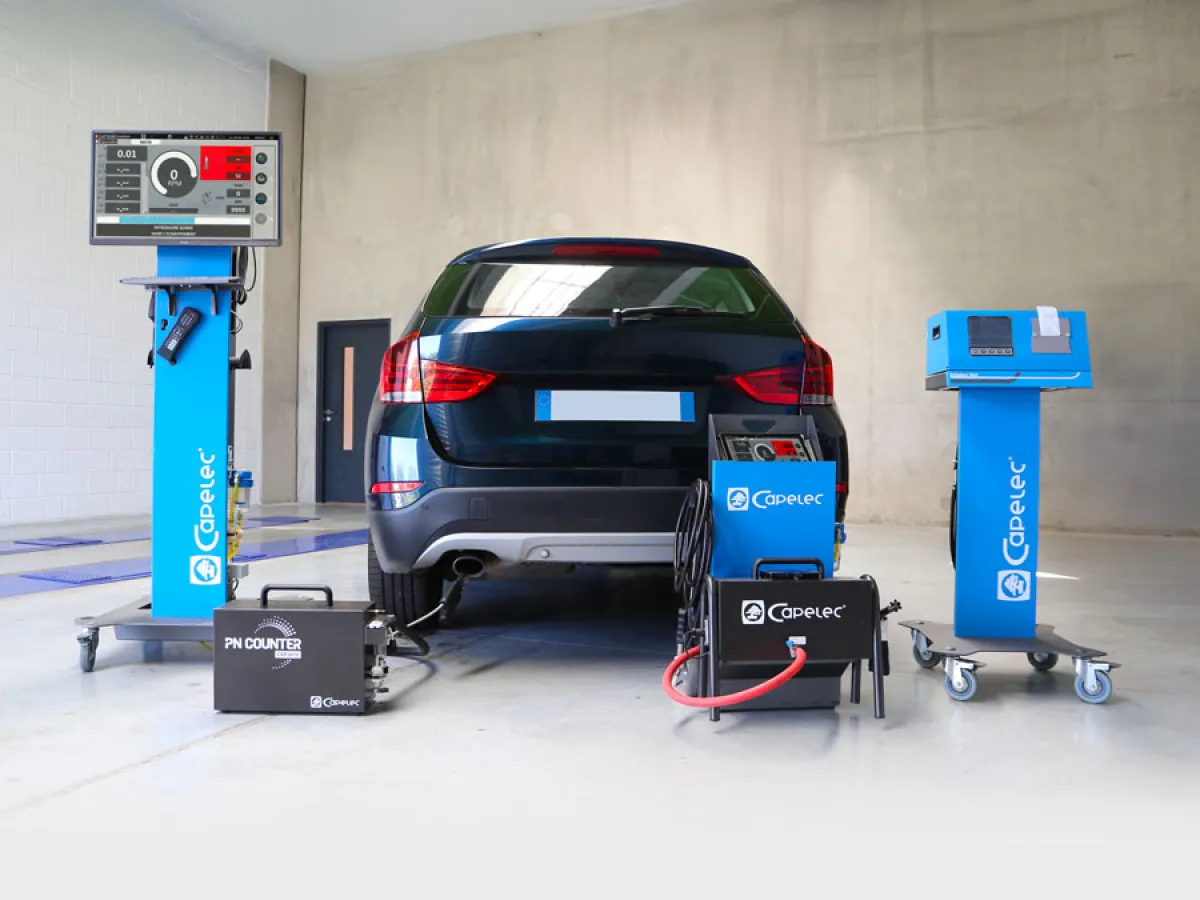
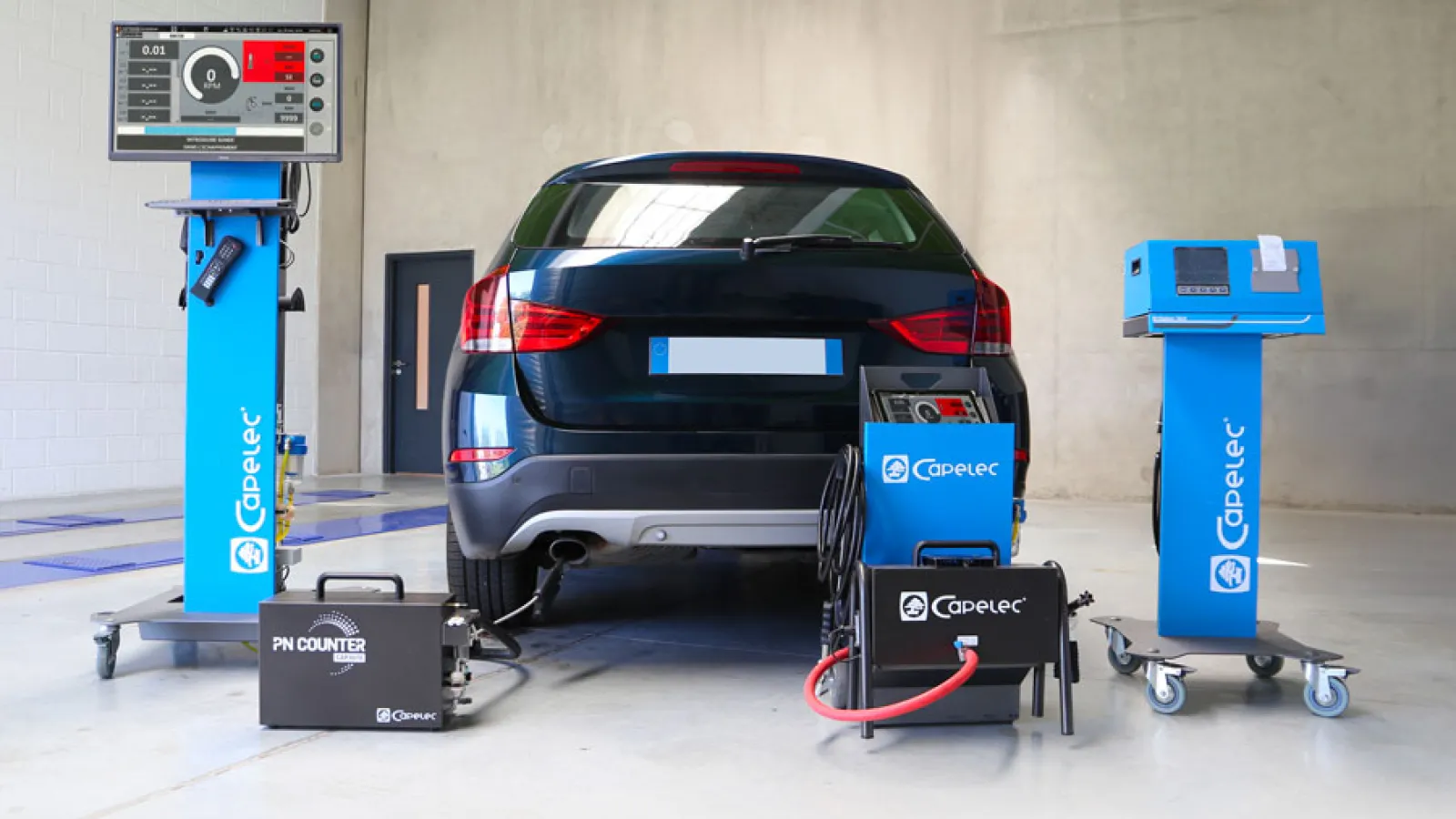
gamme complète d'équipements de mesure des émissions CAPELEC

Three devices, three different measurements

A gas analyzer and an opacimeter are not two variants of the same device: they measure distinct parameters on distinct engine types. The combined unit, on the other hand, is not a third measurement but a combination of the two in a single station.

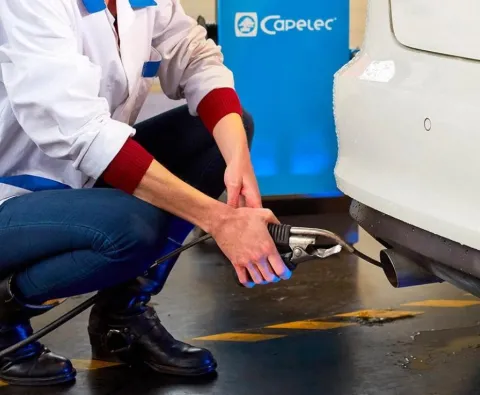
  • The exhaust gas analyzer measures the composition of the gases emitted by a spark-ignition engine: it is designed for gasoline engines, including LPG and CNG engines, depending on the device.
  • The opacimeter measures the opacity of the exhaust smoke emitted by a diesel engine, that is, the attenuation of a light beam passing through the exhaust gases.
  • The combined emissions tester combines these two functions into a single unit with a common interface.

In other words: the question is never “analyzer or opacimeter?” but rather “what types of engines does my business handle, and how should I organize the workstation that processes them?”

Match engine types to the necessary equipment

The configuration is determined by the actual composition of the vehicle fleet you are managing, both today and in the medium term.

Activity Measurement requirement Configuration to be examined
Fleet primarily gasoline-powered Exhaust gas composition. Gas analyzer.
Primarily diesel fleet Exhaust opacity, and depending on the market, particle count. Opacity meter, possibly supplemented by a particle counter.
Mixed fleet Both measurements, at the same station. Combined unit, or separate devices if organizational needs warrant it.
Mixed fleet with high throughput Both measurements, with a time constraint for vehicle passage. Combined unit integrated into the data-entry station to minimize handling.

Less common engine types deserve attention: equipping a center solely for the majority of the fleet leads to vehicles being turned away or to having to improvise a measurement station a few months later.

Separate or Combined Units?

When both measurements are required, both approaches are valid. The choice between them depends more on the layout of the workstation than on the measurement itself.

Separate devices Combined
Workstation footprint Two units to position and power. A single unit, reduced footprint.
Work organization Two interfaces, two procedures for the operator. A single interface, standardized procedures.
Flexibility Each unit can be moved or replaced independently. The entire system is upgraded as a single unit.
Availability A failure affects only one measurement. A system outage affects both measurements.
Scalability A unit can be added later, depending on available space. Must be sized from the outset, based on the model’s functions.

Exact functions and covered measurements vary by model: see the gas analyzers, opacimeters, and emissions testers.

Capelec’s Emissions Testing Product Lines

Each product line is available as a gas analyzer, an opacimeter, or a combination unit: first choose the measurement, then the work environment.

Product Line Principle Versions Who It’s For
CAP3201 Series Standalone unit, LCD screen, and built-in printer CAP3201 G (gas), CAP3201 O (opacimeter), CAP3201 GO (combined) Vehicle inspection and repair shops
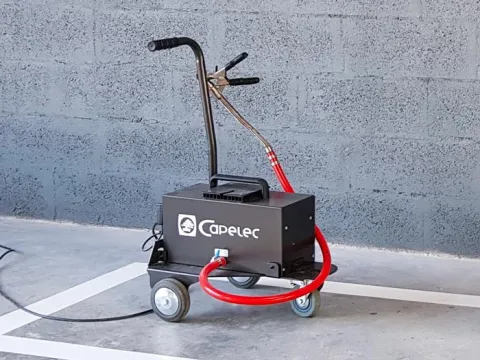
CAP3500 Series Mobile, tablet-controlled on a compact cart CAP3500 G (gas), CAP3550 O (portable opacimeter), CAP3500 GO Workshop (workshop combination unit) Workshops, MRA, and pre-inspection
CAP3600 Series PC-based, 23- to 27-inch touchscreen kiosk, encrypted data transmission CAP3600 G, CAP3600 O, CAP3600 GO, CAP3600 GO Workshop Light-duty, heavy-duty, and 2-, 3-, and 4-wheel vehicle centers, workshops, production sites

For particle count measurement, see the CAP3070 particle counter.

Job Organization and Interfaces

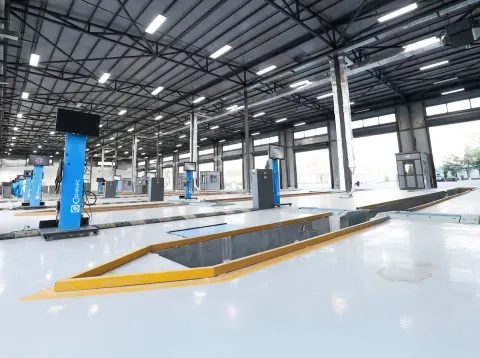
An emissions testing station is not just a piece of equipment—it is a workstation. Points to consider regarding the layout:

  • Access to the exhaust pipe depending on the vehicles being tested—position, height, and accessibility from the workstation.
  • Ventilation or exhaust extraction of gases in the room.
  • The connection to the data-entry station, to avoid having to re-enter results manually.
  • The storage of probes and hoses, which affects their service life.

Maintenance and Operating Costs

Beyond the initial investment, these devices require regular maintenance, which adds to operating costs:

  • The periodic inspections specific to each type of measurement.
  • Consumables and wear parts: filters, probes, hoses, depending on the model.
  • Software updates to keep pace with protocol changes.

These details are specified for the selected configuration. See contract enrollment and repairs.

Why choose Capelec

Design office and factory together in Montpellier: you deal directly with the designer and manufacturer of your equipment, from design to maintenance. Equipment in use on every continent, with subsidiaries in Germany and India.

30+ years

designing and manufacturing measuring equipment

ISO 9001

certified production, every unit checked at the end of the line

10%

of revenue invested in research and development

48h

to receive a proposal tailored to your project

Frequently Asked Questions

Can an opacimeter replace a gas analyzer?

No. The two devices measure different parameters on different types of engines. They are complementary, never interchangeable.

Is a particle counter also needed?

This depends on the requirements applicable to your market and the types of engines you handle. Particle count measurement is not a substitute for opacity measurement: see our guide opacimeter and particle counter.

Is a multifunction device slower than a dedicated device?

Measurement time depends on the model and the procedure, not on the combined unit’s design. In practice, the time savings offered by a combined unit stem primarily from its single interface and the elimination of station changes.

How can these devices be integrated into an existing system?

The available interfaces depend on the models and your installation. This aspect is part of the assessment, particularly when replacing a device on an operational inspection line.

Continue

Have your configuration approved

Please let us know which engine types you work with and the structure of your department: we will confirm the most suitable configuration for you.

Back to top