Smoke meter and particle counter: what are the differences for a professional?

Smoke meters and particle counters are often confused, even though they do not measure the same parameter and do not serve the same purposes. Here is what distinguishes them, in practical terms, for a test centre or workshop.

Secteur exploitation mine

Two devices, two measured quantities

Confusion is common because both devices relate to emissions from a diesel engine. However, they do not measure the same thing, and their results are not interchangeable.

  • The smoke meter measures opacity: the attenuation of a light beam passing through the exhaust fumes. The result reflects the visible density of the fumes.
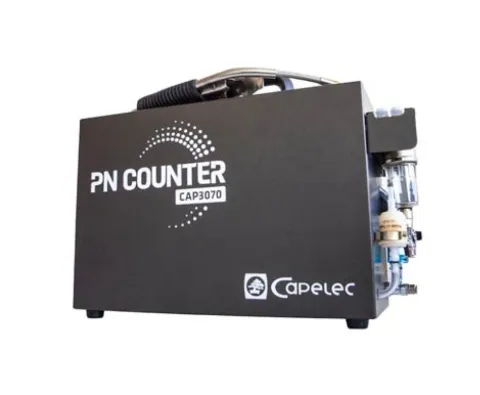
  • The particle counter measures the number of particles per unit volume of gas. The result reflects the quantity of particles, even when they are not visible.

This distinction is key: smoke that is not very opaque may contain a large number of fine particles. This is precisely what opacity fails to detect.

How each measurement works

Understanding the measurement principle helps to understand the limitations of each device.

Smoke meter Particle counter
Measured quantity Smoke opacity (light attenuation). Number of particles per unit volume.
Principle A beam of light passes through a volume of gas; the attenuation is measured. The particles contained in a gas sample are counted.
Sensitivity to fine particles Limited: very fine particles only slightly attenuate the beam. This is the very purpose of the measurement.
What the result indicates The visible density of the emitted smoke. The quantity of particles emitted, whether visible or not.

This has a practical implication: a vehicle with a degraded particulate filter system may exhibit moderate opacity whilst emitting a high number of particles. The two measurements are therefore not directly comparable.

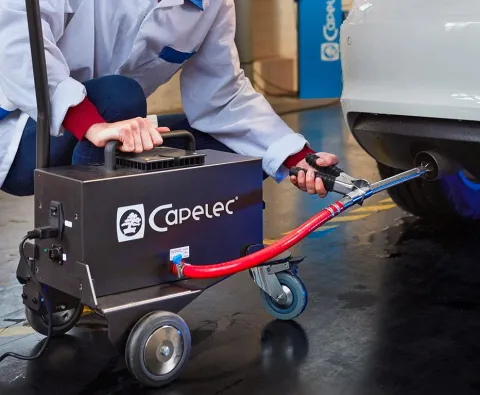
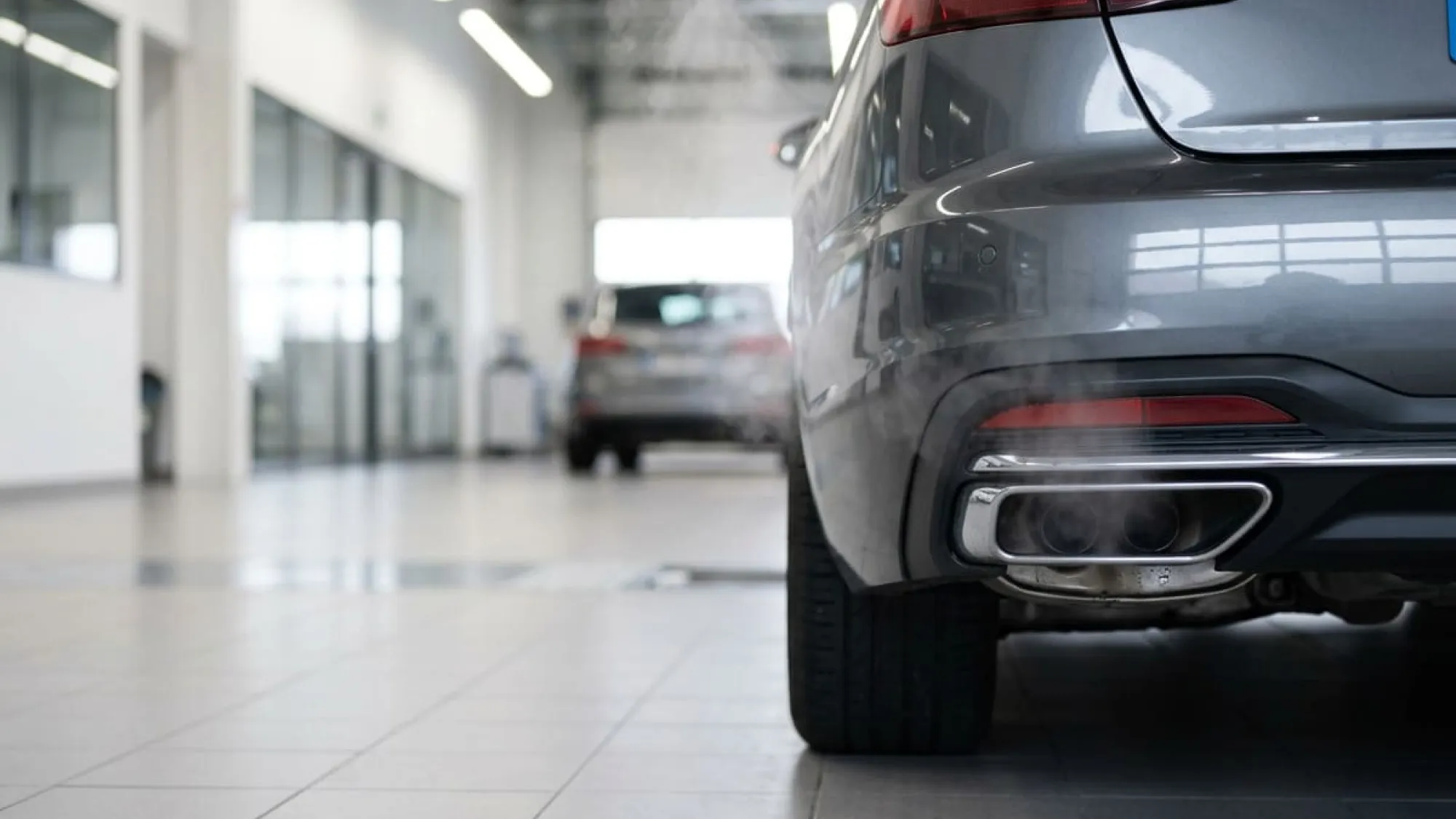
Measurement of exhaust emissions from a diesel vehicle
Opacity and particle count are two distinct measurements, taken under different conditions.

In what contexts are they used?

Opacity measurement is a long-established test for diesel engines. Particulate number measurement addresses a more recent concern: assessing the actual effectiveness of filtration systems, which opacity alone only partially indicates.

Several European countries have updated their testing protocols accordingly, on their own schedules and in their own ways. Others continue to rely solely on opacity measurement. A workshop may also use either measurement for diagnostic purposes, outside any regulatory framework.

The applicable requirements vary by country and are subject to change. A requirement in force in one market does not automatically apply elsewhere, and the necessary approvals differ from one market to another. Before making any investment, please confirm which texts apply to your business and the country in which you operate.

Capelec instruments

Smoke opacity or particle count: both measurements are covered.

CAP3600 O smoke meter
Connected smoke meter for light and heavy goods vehicle centres, compliant with NFR 10025-2016.

Questions to ask before buying

  • What measurement is required for my line of work, and in which country?
  • What approvals does the device have, and are they valid in my market?
  • What engine types and vehicle categories does the device cover?
  • What consumables and what periodic checks does the device require?
  • How does it integrate with my existing measuring station and data-entry system?
  • What is the actual measurement time under the conditions of my business?

Discuss my requirements with an expert

Why choose Capelec

Design office and factory together in Montpellier: you deal directly with the designer and manufacturer of your equipment, from design to maintenance. Equipment in use on every continent, with subsidiaries in Germany and India.

30+ years

designing and manufacturing measuring equipment

ISO 9001

certified production, every unit checked at the end of the line

10%

of revenue invested in research and development

48h

to receive a proposal tailored to your project

Frequently Asked Questions

Does a particle counter replace the smoke meter?

Not as a matter of principle. The two devices measure different parameters, and the required measurement depends on the protocol applicable in your market. Depending on the circumstances, one, the other, or both may be necessary.

Are the two results comparable?

No. Opacity and particle count are not expressed in the same unit and cannot be derived from one another. There is no general conversion rule.

Are these devices suitable for heavy vehicles?

Diesel engines in heavy goods vehicles are subject to these measures, but access to the exhaust and sampling conditions differ. Compatibility and the necessary accessories must be checked on a model-by-model basis.

What maintenance is required?

Both ranges of equipment require periodic checks and routine maintenance, with consumables and wear parts varying depending on the model. See contract subscription and repairs.

The equipment in question

Smoke meters
The Capelec range of diesel smoke opacity measurement equipment.

Not sure which measurement you need?

Tell us about your business, your market and the vehicles you deal with: our specialists will guide you towards the appropriate measurement and equipment.

Back to top