


Greece: New MOT Inspection for Exhaust Particles

Deployment of Particle Measurement at Greek MOT Centers
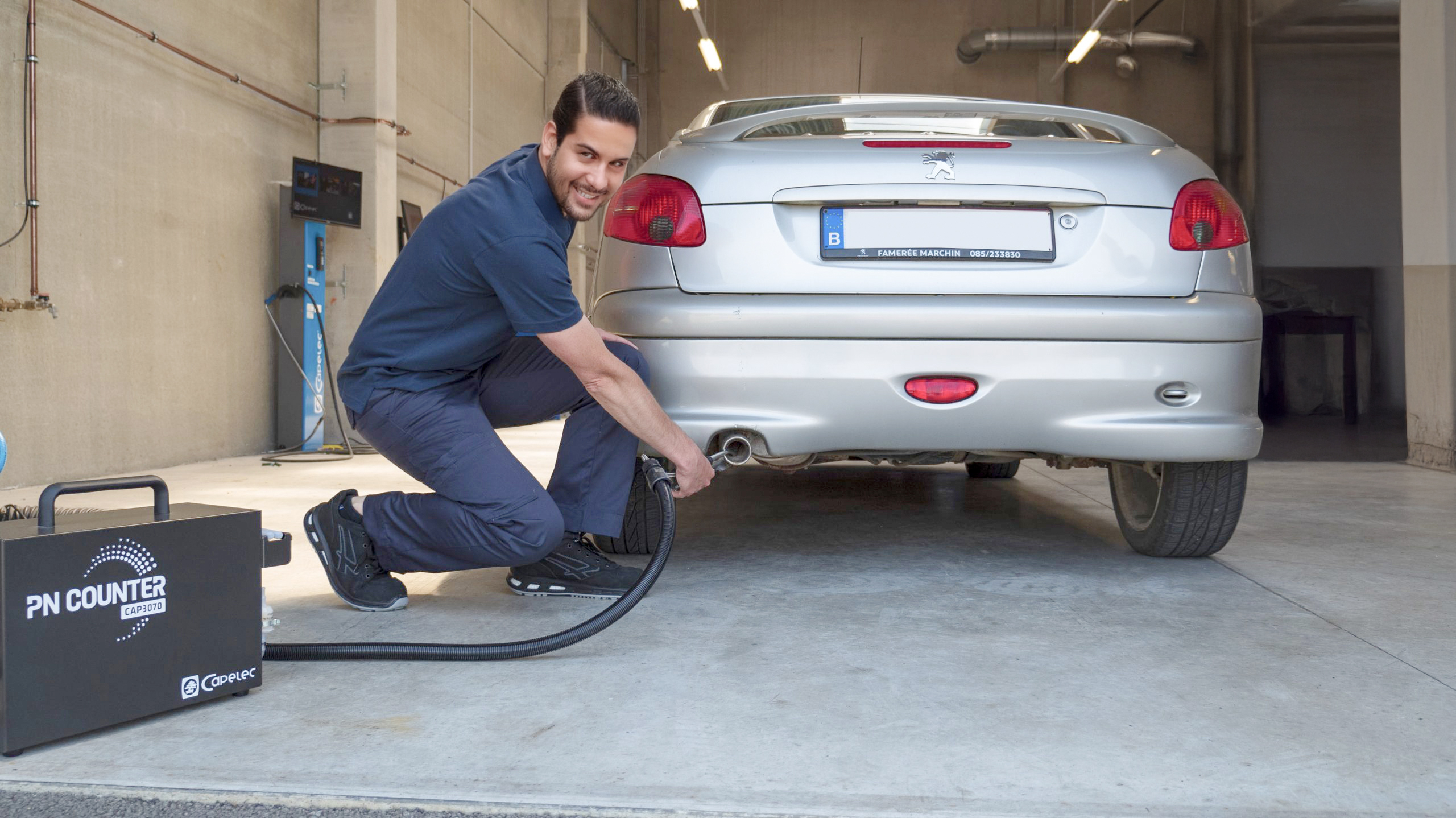
Driven by the Greek Ministry of Infrastructure and Transport, technical control centers (KTEO) have officially adopted the measurement of the number of microparticles (PN – Particle Number), replacing the old exhaust gas opacity measurement.
This means that it is now directly verified whether the DPF (Diesel Particulate Filter) is actually working, and not just whether the car "doesn't smoke".
The objective of these new measures is to reduce air pollution and identify vehicles driving with a removed, damaged, or tampered particulate filter—a common practice aimed at avoiding high replacement costs.
↦ Permitted threshold: 1,000,000 particles/cm³ for modern Euro 5–Euro 6 diesel engines.
The new analyzers will measure the number of particles emitted, with a strict limit of 1,000,000 particles/cm³, which in practice requires the DPF to function perfectly.
Extension of the measurement to more controls
The latest provisions indicate that the inspection will not be limited solely to the periodic technical control center, but will also be associated with:
• The Exhaust Gas Control Card (KEK)
• Roadside checks (mobile units)
• Highly polluted regions (Attica and Thessaloniki initially)
These next-generation inspections will enable real-time measurement of particle emissions.
Which vehicles are most affected?
Recent directives confirm that the main targets are:
• Euro 5 and Euro 6 diesel vehicles
• Vehicles registered from 2013-2014 onwards
• Vehicles driving particularly in polluted urban centers
Fines and penalties
Failure to comply with the new limits may result in:
• An automatic failure of the MOT test
• Mandatory repair or replacement of the DPF (at the owner's expense)
• A re-inspection of the vehicle
• Severe administrative fines in case of repeated offenses
The general trend in Greece for 2026–2027 is clear:
↦ We are moving from a "visual inspection of exhaust gases" to an accurate measurement of microparticles (PN)
↦ The DPF is now becoming a crucial success factor during the diesel technical inspection
↦ Controls are integrated into a broader and stricter environmental vehicle monitoring network
Articles récents