How to choose a headlight aimer for your workshop or inspection center?

Optical or sensor-based, fixed or movable: the choice of a headlight aimer depends on the vehicles you service, your throughput, and the space you have available. Here are the criteria to consider, in order.

Vehicule légers

Start with the vehicles and their lighting systems

The first criterion is not the device itself, but the vehicle fleet you are working with. Lighting technologies have diversified, and not all of them require the same level of precision when tested.

  • Vehicle categories: light-duty vehicles, commercial vehicles, heavy-duty vehicles, and two-wheeled vehicles. These determine the height of the floodlight to be covered and the stability required for the fixture.
  • Lighting technologies: halogen, xenon, LED, matrix or adaptive beams. The more structured the beam, the more precision is required for analysis.
  • The proportion of newer vehicles in your business: this determines the level of performance required today and in five years.

Specify the context of use

A headlight aimer used fifteen times a day at a vehicle inspection center and one used only occasionally at a repair shop do not face the same constraints.

  • Frequency of use: this determines whether or not a dedicated workstation and a permanent measurement area are necessary.
  • Fixed or mobile workstation: a device moved between several bays must remain easy to position and level.
  • Lighting conditions: artificial lighting, daylight, glare. These factors influence the chosen reading method.
  • Operators: The number of people who will use it and their rotation schedule affect the importance of ergonomics and adjustment assistance.

Compare reading technologies

Two main families coexist. Neither is superior in absolute terms: they differ in how the beam is analyzed and in the constraints they impose on the operator.

Optical Reading Sensor- or Camera-Based Reading
Principle The beam is projected onto a screen and interpreted visually by the operator. The beam is captured and then analyzed, and the result is displayed.
Interpretation factor Depends on the operator’s experience, particularly with complex beams. Reduced: the reading is objectified by the device.
Traceability Manual recording of values. Results are displayed and, depending on the model, can be saved or transmitted.
Ease of Use Quick to learn for an experienced operator. Positioning and adjustment assistance depending on the model.
Typical Use Workshop with moderate throughput. Control center or high-volume workshop with a modern fleet.

The exact features—measurement modes, display, recording, connectivity—vary from model to model. The product sheets for the réglophares line specify these features for each individual device.

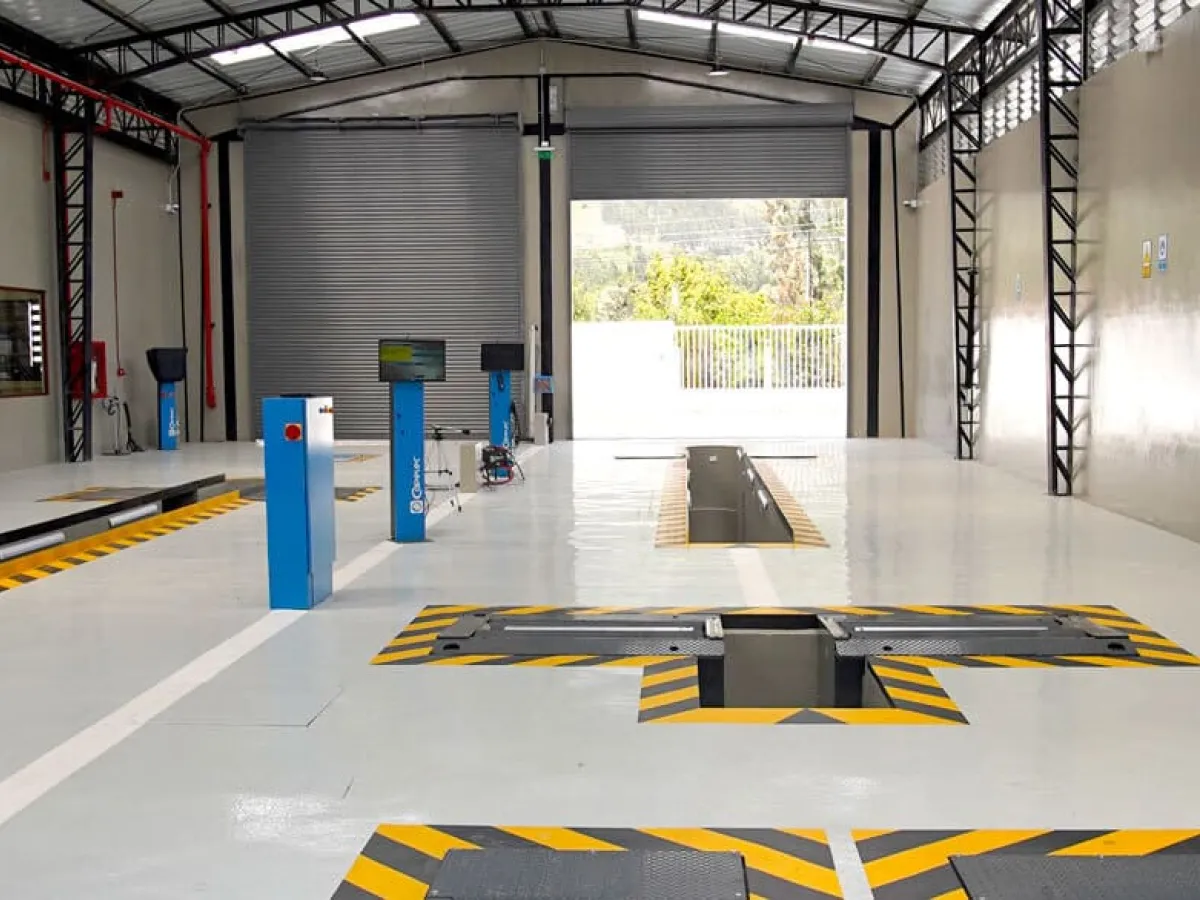
Do not overlook the measurement area

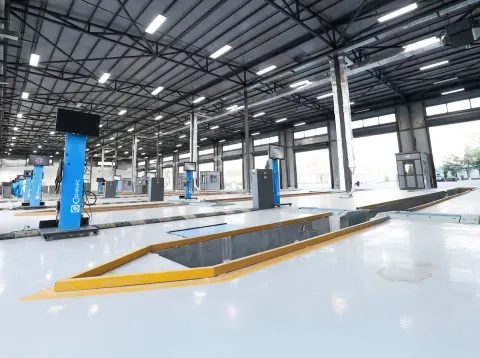
This is the aspect most often underestimated. A headlight aimer, regardless of its technology, will only provide a usable result if the vehicle and the device are resting on a suitable surface.

  • A level surface, whose flatness and length are determined by the selected device and the vehicle category.
  • A clear space in front of the vehicle, which must not be used as a storage or waiting area.
  • A device guidance system—rail, markings, or reference points—for repeatable positioning.
  • A controlled lighting environment, particularly for optical scanning.

If the available space is limited, it may influence the choice of equipment as much as the vehicles being processed.

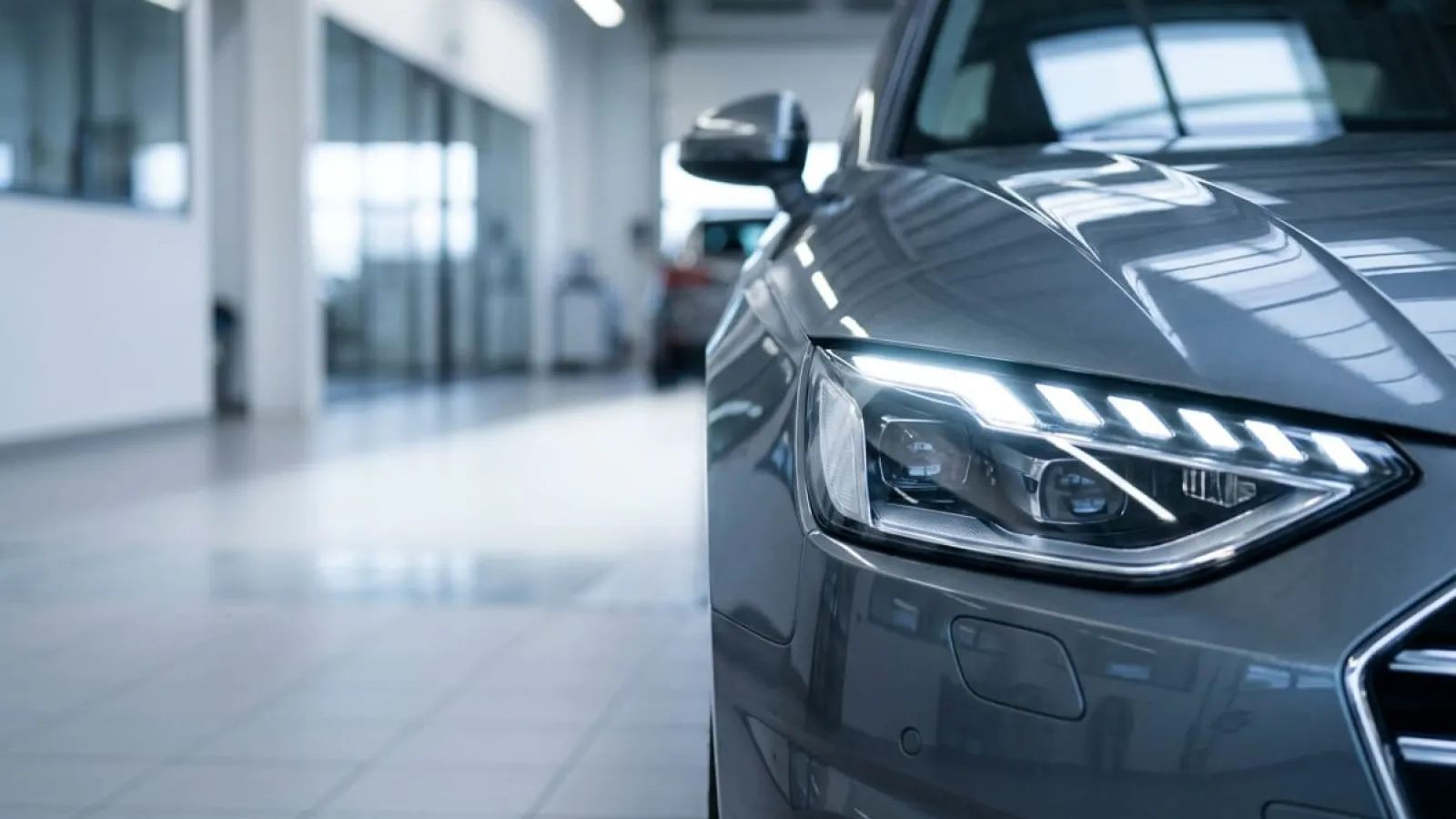
The requirements applicable to the measurement area and lighting inspection depend on your business and your market. These are verified with you during the design phase, in accordance with the regulations in effect where you operate.

The Four Decisive Questions

If you had to choose just four criteria before comparing models, these are the ones.

01

Your vehicles

Vehicle categories and predominant lighting technologies in your fleet.

02

Your turnaround time

Frequency of use: stationary unit or device moved between multiple bays.

03

Your scope of work

Actual length, flatness, and clearance available in the workshop.

04

Your operators

Number of users, turnover rate, and expected level of assistance during measurement.

Which Capelec headlight adjuster is right for which application?

From mechanical to robotic headlight adjusters, the product line covers all applications: repair shops, vehicle inspection centers, and end-of-line inspections.

Model Technology Key Features Who It’s For
CAP2100 Mechanical: alignment laser, Fresnel lens Simple and robust, halogen, xenon, and LED Workshops and garages
CAP2500 Electronics with photodiodes Guided measurement, accuracy within ±0.2%, Wi-Fi and Bluetooth Vehicle inspection and workshop
CAP2600 Camera-based electronics Halogen, xenon, LED, and Matrix, AFS/GFHB calibration Vehicle inspection and workshop, passenger cars, commercial vehicles, and motorcycles
CAP2600 Workshop Camera, expert workshop version Inspection in under 7 minutes, ground compensation, before/after report Repair shops
CAP2700 XL lens and Smart Control Extra-wide headlights, LED, laser, and Matrix, one-handed control Technical inspection and workshop
CAP2900 Robotized, CCD camera Automatic movement, alignment, and measurement Test centers, end-of-line inspections

Find the right model for my business

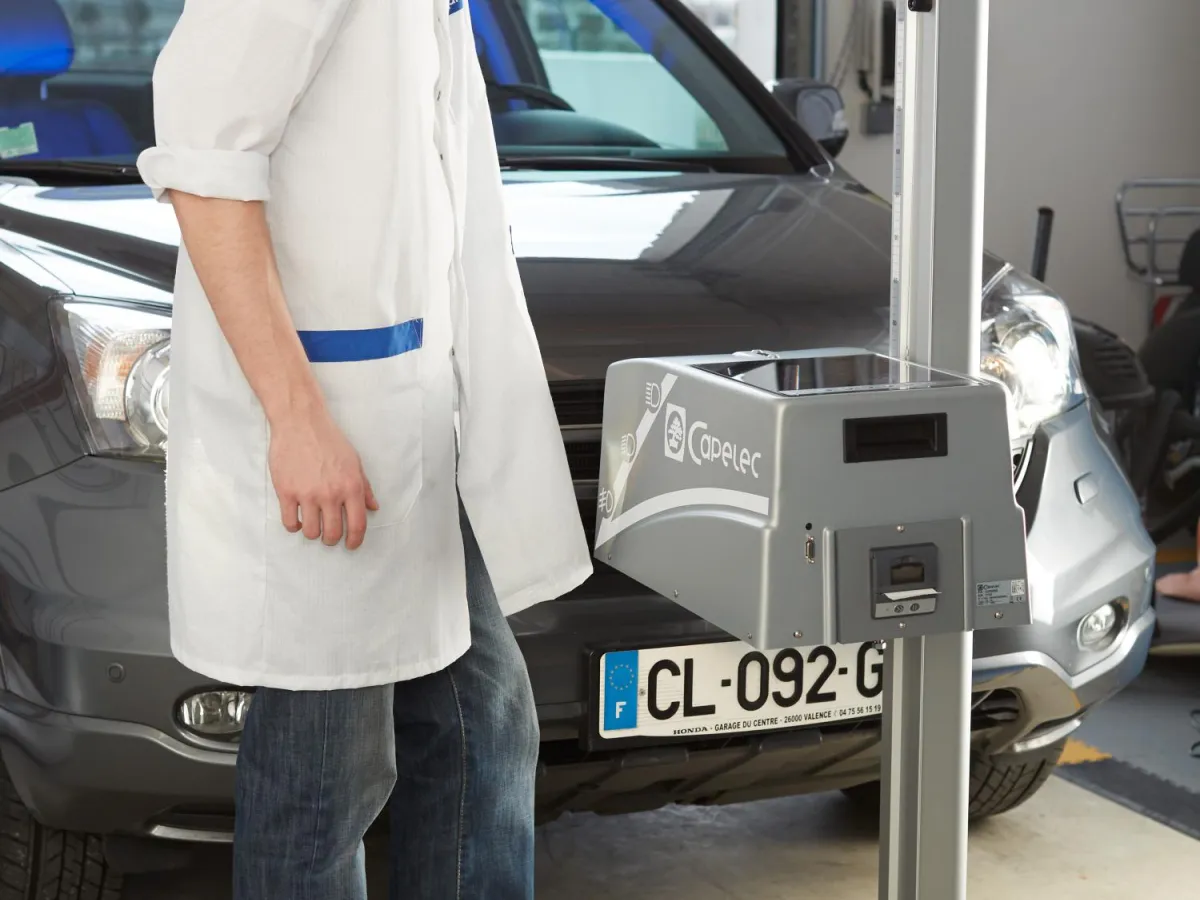
Contrôleur réglant les phares d'une voiture avec le réglophare CAP2500

One device, one measurement area

A headlight alignment tester cannot be evaluated in isolation: its accuracy depends as much on its technology as on the surface on which it is used. It is the combination of the device and the measurement area that yields a usable result, one that is reproducible from one operator to another.

View the headlight alignment tool lineup

Why choose Capelec

Design office and factory together in Montpellier: you deal directly with the designer and manufacturer of your equipment, from design to maintenance. Equipment in use on every continent, with subsidiaries in Germany and India.

30+ years

designing and manufacturing measuring equipment

ISO 9001

certified production, every unit checked at the end of the line

10%

of revenue invested in research and development

48h

to receive a proposal tailored to your project

Frequently Asked Questions

Is a different headlight aimer required for heavy-duty trucks?

The headlight height and required stability differ from those of a light-duty vehicle. Some devices cover a wide range of heights, while others are designed for specific applications. Compatibility must be verified on a model-by-model basis.

Can a headlight aimer be shared across multiple bays?

Yes, provided that each bay has a measurement area that meets the device’s requirements and allows for reproducible positioning. The trade-off is the time required for setup with each use.

How does the device connect to the rest of the equipment?

Depending on the model, results are stored locally or transmitted to the data entry station. The available interfaces are listed on the product data sheets and are specified during the project planning phase.

What maintenance should be planned?

A headlight aimer requires routine maintenance and periodic inspections, the specifics of which depend on the model and your business. See service contract enrollment and repairs.

Continue

See a headlight aimer in use

Tell us about your shop, your vehicles, and your testing area: we’ll recommend the right setup and, if you’d like, provide a demonstration.

Back to top