Electric Scooters: Monitoring Speed on the Roadside
News - 17/11/2026

Search
Change language
CloseElectric Scooters: Monitoring Speed on the Roadside
In just a few years, electric scooters and bicycles have become a common sight in every city. With them comes the problem of speed limits that are sometimes significantly exceeded. For law enforcement, this raises a question: how—and with what equipment—can they effectively enforce the law on the spot?
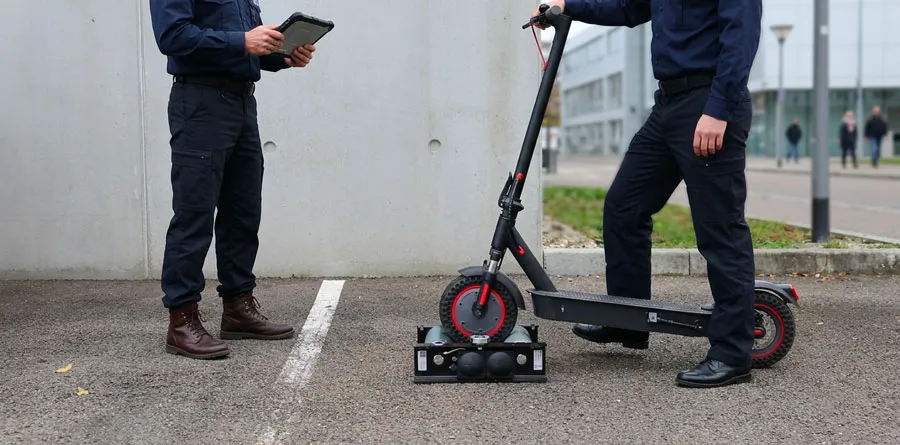
Throughout Europe, the speed of electric scooters and bicycles is limited, generally between 20 and 25 km/h depending on the country. In France, for example, electric scooters (EDPM) must not exceed 25 km/h, and the power assistance on electric bicycles must cut off at 25 km/h. However, inspections regularly reveal vehicles capable of traveling at speeds exceeding 40 km/h, on bike paths or among pedestrians.
Municipal and national police forces are therefore stepping up enforcement operations. In the Netherlands and Switzerland, the police are equipped with several hundred portable roller test benches—known as curvometers or speed testers—and conduct roadside inspections of electric micro-vehicles. Germany has also been testing this type of equipment since June 2025.
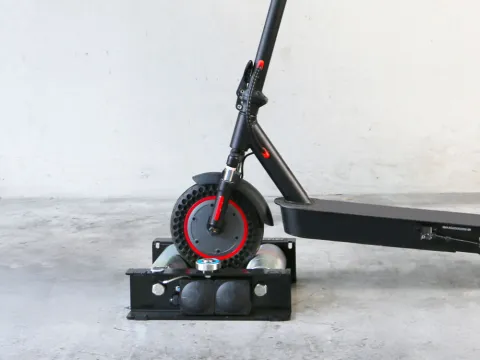
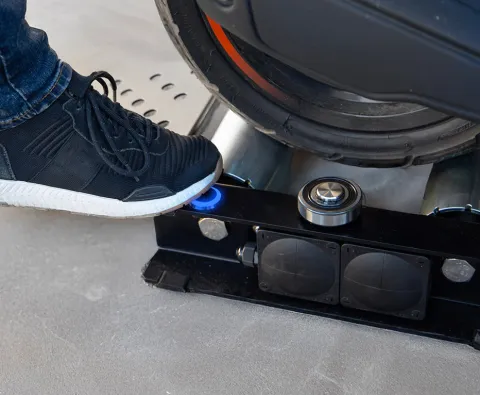
The speedometer on an unrestricted scooter may show 25 km/h even though the vehicle is traveling much faster. Only an independent measurement can determine the actual maximum speed. This is the role of the speed tester: a roller bench on which the drive wheel spins freely while the device measures the speed reached.
The CAP9610 from Capelec is a portable curvometer (or speed tester) that measures the actual maximum speed of electric scooters and electric bicycles. Used in technical inspection centres to test scooters, it is also suitable for roadside use during traffic stops.
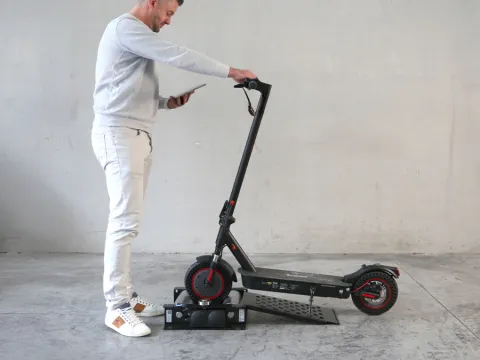
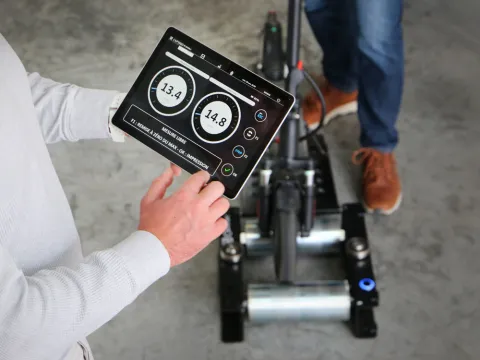
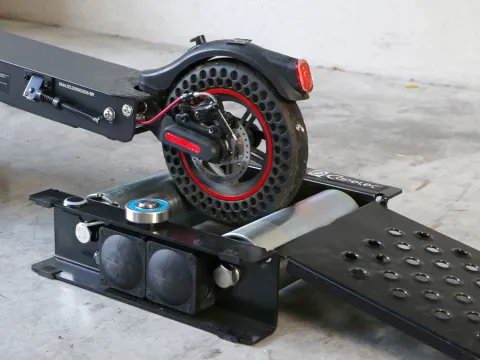
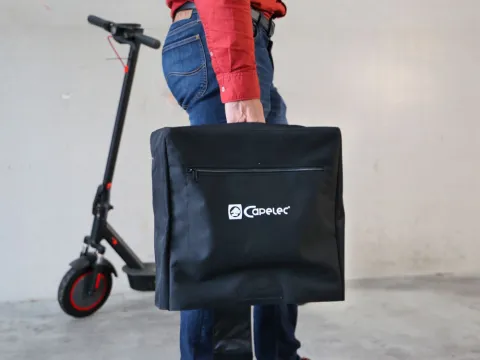
Capelec designed the CAP9610 for roadside inspections. Compact and portable, it consists of a roller bench and a touchscreen tablet and fits into a 20-kg carrying case.
It runs on battery power, without a mains connection, and communicates via Bluetooth with a rugged tablet. It can be equipped with a lightweight ramp to facilitate vehicle access to the rollers. A scooter wedge is also available for added stability.
A single solution for multiple vehicles: electric scooters, electric bicycles, and mopeds. The software offers a dedicated scooter mode, which can be selected on the tablet.
A 3-step procedure:
the technician positions the vehicle, starts the measurement, and reads the result. The test takes just a few seconds.
Accurate measurement:
from 0 to 80 km/h, with an accuracy of ±1% or ±0.5 km/h.
Battery life tailored to operations:
over 40 hours of continuous battery use.
A simple interface:
the screen guides the operator, requiring no complex training.
During an inspection, measurement reliability is essential. The CAP9610 is certified by UTAC for mandatory inspections of vehicles in the L category. Its accuracy is specified as ±1% or ±0.5 km/h over a range of 0 to 80 km/h.
The CAP9610 fits in a vehicle trunk and can be quickly set up on a sidewalk, in a parking lot, or in a parking space, with or without an access ramp. This allows enforcement teams to set up more checkpoints, both in the city and on the outskirts, and tailor their operations to the areas where vehicles are actually traveling.
Recognized expertise
Capelec designs and manufactures vehicle inspection equipment: exhaust gas analyzers, particle counters, brake testers, and headlight aimers. The CAP9610 benefits from this expertise in measurement and regulatory compliance.
Are you a municipal police department, a local government, or a distributor?
Back to top